Kentaro Miura’s “Berserk” is more than just a manga; it’s an epic tale that has captivated readers for decades with its dark and intricate narrative. With its richly detailed and evocative artwork, “Berserk” possesses tremendous cinematic potential. In this article, we will delve into the visual aspects of “Berserk” and explore how its stunning illustrations, dramatic panel composition, and intricate use of symbolism contribute to its cinematic appeal.
The Artistry of Kentaro Miura
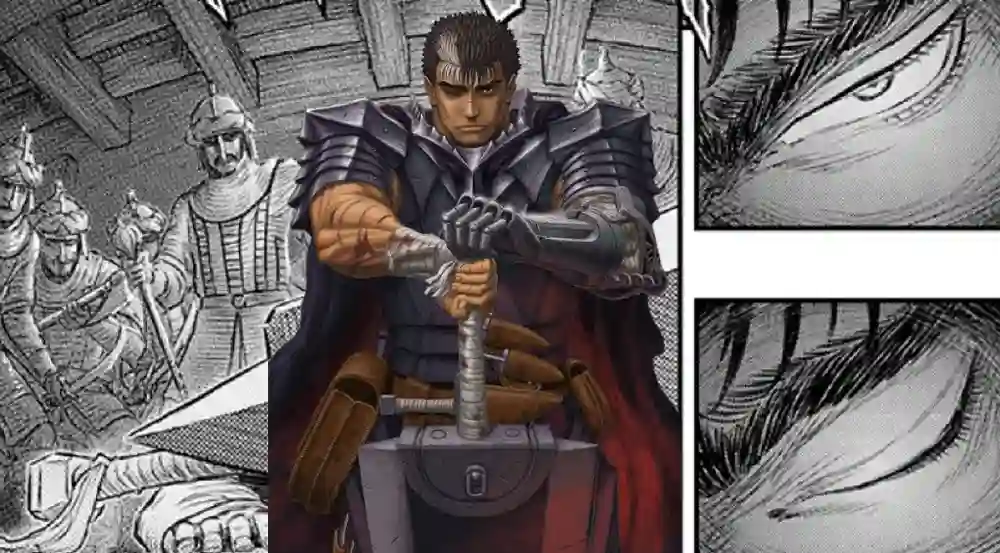
One cannot discuss the cinematic potential of “Berserk” without acknowledging the masterful artwork of Kentaro Miura. Miura’s illustrations are a visual feast, characterized by their meticulous attention to detail, dynamic character designs, and atmospheric landscapes. His ability to convey emotions, action, and storytelling through imagery is a testament to his artistic prowess.
The characters in “Berserk” are brought to life through Miura’s skilled rendering. Guts, with his imposing physique and signature Dragon Slayer sword, is an iconic example. The facial expressions of characters convey a wide range of emotions, from Guts’ intense determination to Griffith’s enigmatic charisma. Miura’s art allows readers to connect with the characters on a deep and emotional level.
The landscapes in “Berserk” are equally impressive, from sprawling medieval cities to eerie, otherworldly realms. The level of detail in each panel immerses readers in the world of the manga, creating a vivid sense of place and atmosphere. Miura’s ability to craft both the grand and the intimate moments through his artwork is a key element of the manga’s cinematic quality.
Dramatic Panel Composition
One of the most cinematic aspects of “Berserk” is its dramatic panel composition. Miura’s use of panel layout, framing, and sequencing is akin to the work of a film director, creating a dynamic visual narrative that keeps readers engaged and invested.
Action sequences in “Berserk” are a prime example of Miura’s cinematic approach. He often employs unconventional panel shapes and sizes to emphasize the speed, intensity, and impact of the battles. Quick cuts between close-ups and wide shots enhance the sense of motion, allowing readers to follow the action with cinematic fluidity.
Furthermore, Miura’s use of double-page spreads is nothing short of spectacular. These spreads often depict pivotal moments or dramatic turning points in the story. They provide a panoramic view of the unfolding events, allowing readers to immerse themselves fully in the grandeur and scale of the narrative.
Symbolism and Visual Metaphors
“Berserk” is rich in symbolism and visual metaphors, which add depth and complexity to its storytelling. Miura’s use of these visual elements contributes to the manga’s cinematic quality by conveying abstract concepts and emotions through imagery.
The Behelit, a mysterious and ominous artifact, is a prominent symbol in “Berserk.” Its eerie appearance and the sense of foreboding it carries are visually striking. The use of symbolism extends beyond the Behelit, encompassing recurring motifs like the brand of sacrifice, the Eclipse, and the intricate designs of the God Hand.
Miura’s visual metaphors are particularly effective in conveying the inner struggles and complexities of the characters. The “Beast of Darkness,” for instance, is a recurring visual representation of Guts’ inner turmoil and the darkness that haunts him. It appears as a shadowy, bestial figure that mirrors his internal conflict.
The Power of Pacing
Pacing is a crucial element in cinematic storytelling, and “Berserk” excels in this regard. Miura’s control over the rhythm and tempo of the narrative is akin to a film director’s ability to manipulate time and create tension.
The manga employs pacing techniques that enhance the cinematic experience. Moments of intense action are juxtaposed with quieter, contemplative scenes, allowing readers to catch their breath and build anticipation for what’s to come. Miura’s mastery of pacing ensures that readers are fully invested in the ebb and flow of the story.
Moreover, “Berserk” utilizes flashbacks and nonlinear storytelling to provide context and depth to the characters and the overarching narrative. This non-linear approach adds layers to the storytelling, similar to how flashbacks are used in films to reveal character motivations and backstory.
The Potential for Adaptation
The cinematic potential of “Berserk” has not gone unnoticed by the entertainment industry. The manga has inspired various adaptations, including an anime series, films, and video games. While these adaptations have received mixed responses from fans, they have highlighted the enduring appeal and adaptability of the source material.
The visual style and storytelling of “Berserk” lend themselves well to cinematic adaptation. Its dark and immersive world, complex characters, and epic battles have the potential to translate into visually stunning and emotionally resonant on-screen experiences.
Conclusion
“Berserk” stands as a testament to the cinematic potential of manga as a medium. Kentaro Miura’s masterful artwork, dramatic panel composition, and use of symbolism create a visual narrative that rivals the most compelling cinematic experiences. The manga’s ability to convey complex emotions, action, and storytelling through imagery is a testament to the power of visual storytelling.
While “Berserk” has already inspired various adaptations, its potential as a cinematic masterpiece is far from exhausted. With the right creative vision and resources, “Berserk” could become an iconic entry in the world of film or television, captivating a new generation of audiences with its dark and immersive storytelling. Regardless of its future adaptations, “Berserk” remains a shining example of the cinematic potential of the medium, leaving an indelible mark on the world of manga and beyond.